When to Hire an AI Consultant (And When Not To)
Not every business needs an AI consultant. Here's how to know if you do — and what to look for when you're ready.
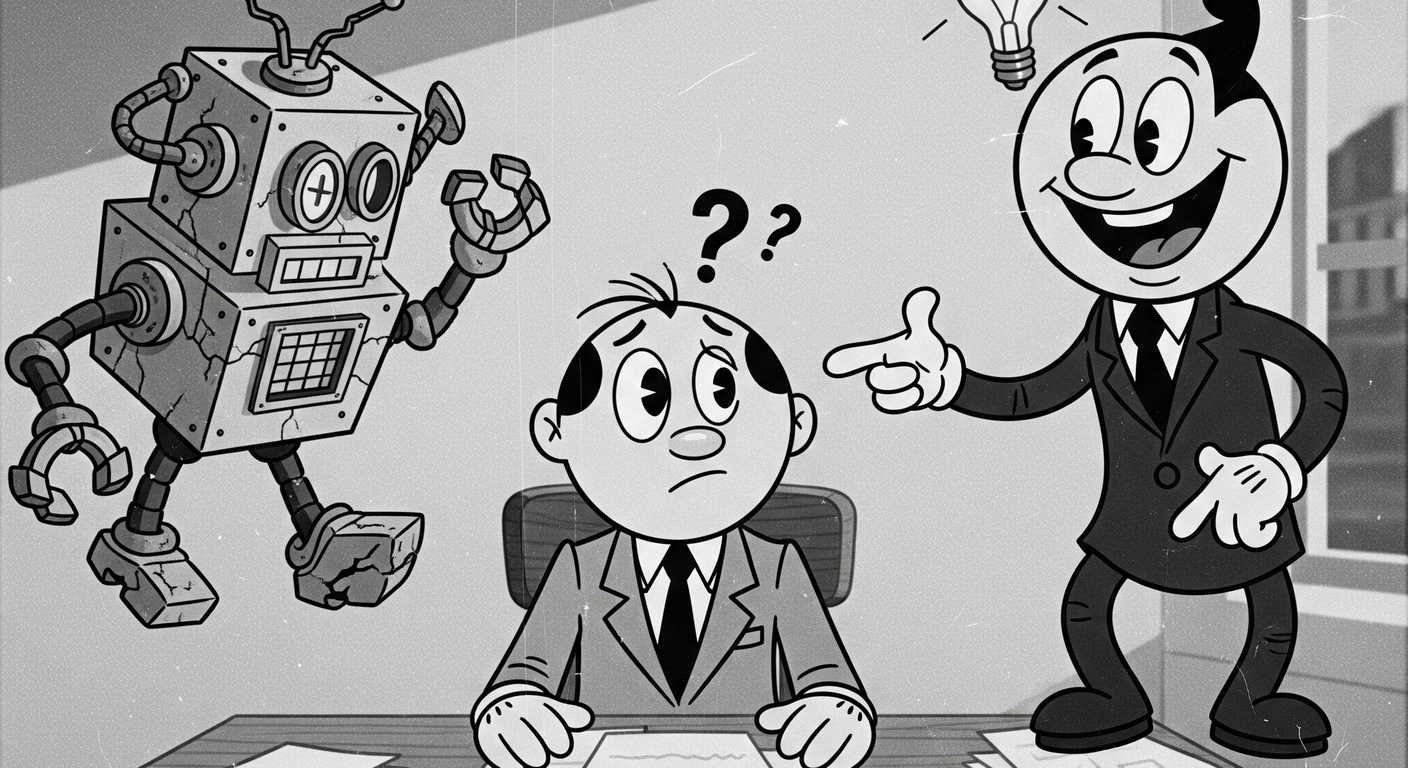
You don't need an AI consultant.
At least, not yet. Maybe not ever. And anyone who tells you otherwise before understanding your business is trying to sell you something.
But there are specific situations where bringing in outside AI expertise is the difference between shipping something real and burning six figures on a science project. Here's how to know which one you're in.
You DON'T Need an AI Consultant If...
You haven't tried the obvious things yet
Before you hire anyone, have you:
- Actually used ChatGPT/Claude/Gemini for the task you want to automate?
- Asked your existing developers to prototype something?
- Checked if your SaaS tools already have AI features you're not using?
Seriously. Most businesses are sitting on AI capabilities they've already paid for. Notion AI, Slack AI, HubSpot AI, Salesforce Einstein. If you're not using the AI features in your existing stack, an AI consultant will just tell you to start there.
Your problem is really a data problem
"We want AI to analyze our customer data" is not an AI problem when your customer data lives in 14 spreadsheets across 6 departments with no consistent format. That's a data engineering problem. AI can't help you if your data is a mess.
Fix the data first. Then we'll talk.
You want AI for the sake of having AI
"Our competitors are using AI" is not a business case. "Our team spends 200 hours per month manually processing invoices, and we want to cut that to 20" is a business case. If you can't articulate the specific outcome you want, you're not ready.
You DO Need an AI Consultant When...
1. You have a clear problem but don't know the best approach
You know what you want to automate. You've maybe even prototyped something. But you're not sure if you should fine-tune a model, use RAG, build an agent, or just write better prompts. The landscape is overwhelming.
This is the most valuable engagement for a consultant: helping you make the right architectural decisions before you invest months of engineering time in the wrong direction.
What this looks like: A Focused AI Workflow Pilot where we map one workflow, evaluate the options, and build a working proof of concept. Not a 50-page report.
2. Your team is technical but not AI-native
You have good developers. They can build software. But they've never built an LLM pipeline, set up a RAG system, or designed an agent architecture. The tutorials make it look easy. Production makes it hard.
The gap between a ChatGPT wrapper and a reliable production AI system is enormous. Prompt engineering, eval frameworks, hallucination management, cost optimization, latency requirements. These are skills your team can learn, but learning on a production system is expensive.
What this looks like: An AI Command Center engagement that puts ownership, review rules, and a delivery cadence around your AI work. Your team stays in the loop and keeps the system after handoff.
3. You need to move fast
Maybe you have a competitive window. Maybe your board set a deadline. Maybe you just realized your biggest competitor shipped an AI feature last week.
Speed matters, and an experienced AI consultant can compress timelines dramatically. We've shipped complete AI-powered products in weeks. Not because we're geniuses. Because we've made all the mistakes already and know which shortcuts are safe and which aren't.
What this looks like: An intensive build sprint. We embed, we ship, you own the code.
4. You're evaluating AI vendors and need an independent opinion
AI vendor demos are impressive. That's what demos are for. But evaluating whether a vendor's solution actually fits your data, your workflows, and your compliance requirements takes domain expertise.
An independent consultant has no margin on the vendor's product. We'll tell you if the $200K platform you're considering is going to work, or if a $500/month API integration would do the same thing.
What this looks like: A 1-week technical evaluation. We test the vendor's system against your actual data and workflows, not their demo data.
What to Look For in an AI Consultant
They ask about your workflow before they pitch a solution
If someone starts talking about their platform, their proprietary model, or their "AI framework" before they understand your business: run.
They've shipped, not just advised
Ask to see something in production. Not a slide deck. Not a case study with anonymized metrics. A real thing, running, that handles real data. If they can't show you one, they're a strategy consultant cosplaying as a technical one.
They give you the code
Ask which custom deliverables you will own, what documentation and access are included, and which parts use third-party licences or subscriptions. The handoff and support boundary should be written down before work begins.
They're honest about what AI can't do
The best AI consultants will sometimes tell you not to use AI. If a rule-based system, a better workflow, or a $50/month SaaS tool solves your problem, that's the right answer, even if it means a smaller invoice.
The Cost Question
At GTA Labs, the usual starting point is a Focused AI Workflow Pilot, typically around CAD $10,000. That covers one agreed workflow and a useful working pilot, with scope and price fixed before starting.
The free 45-minute fit call comes first. Paid discovery is optional when a question needs separate investigation. A complex integration, wider production rollout, or ongoing support is a larger engagement and is priced separately.
Compare the fee with the value of the problem, the cost of running the solution, and the work your team must contribute. A pilot should give you evidence for the next decision; it should not require an assumed revenue increase to look worthwhile.
The Bottom Line
Hire an AI consultant when you have a clear problem, your existing team needs a specific skill boost, and you want to move faster than you could on your own. Don't hire one because it's trendy, because a vendor told you to, or because you read an article that said AI is going to replace your entire department.
The best outcome of an AI consulting engagement isn't a deliverable. It's your team being able to do the next project without you needing to call us back.
Greg Mousseau is the founder of GTA Labs, an AI consulting firm based in Toronto. We help teams ship AI that works in production, from assessment to deployment. Book a call to talk through your situation.